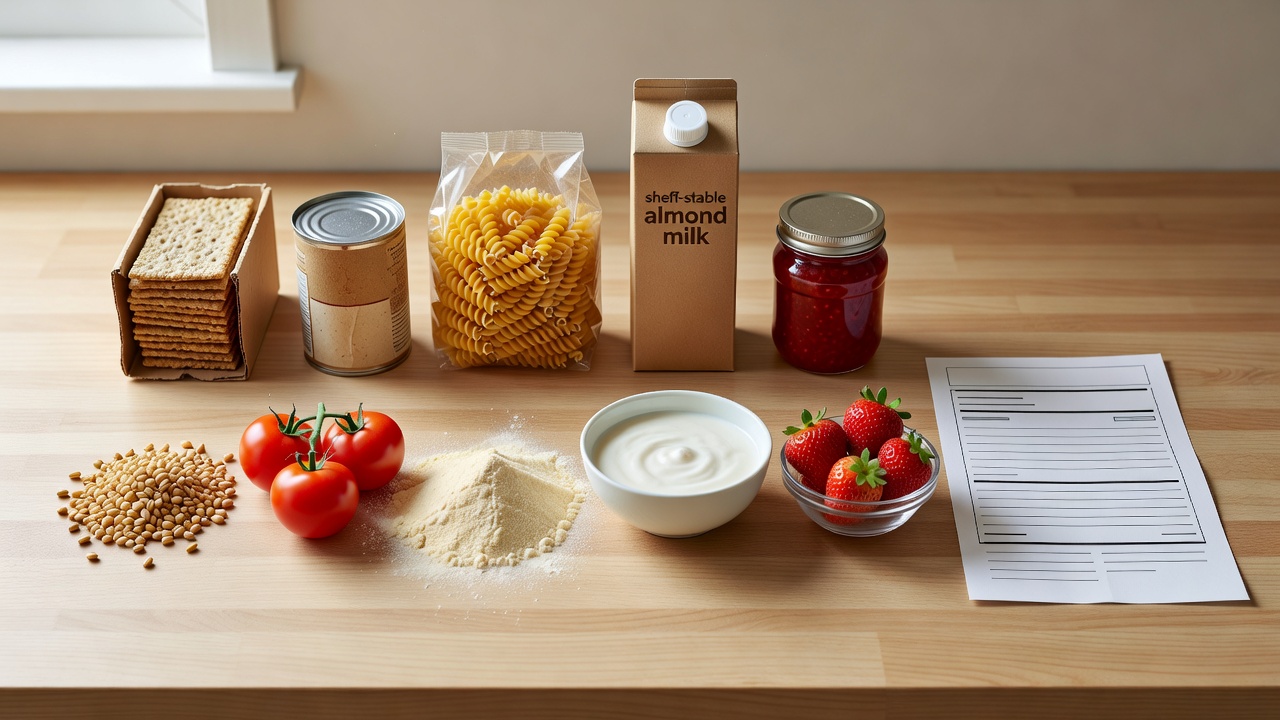
First, identify what the numbers describe
Before looking for protein or sugar, check the measurement basis. A label may show values per serving, per 100 grams, per 100 milliliters, or for the whole package. These are not interchangeable. A cereal serving and the bowl you actually pour may be different amounts, while a bottle that looks like one drink may contain more than one labeled serving.
In the United States, the Food and Drug Administration explains that serving sizes reflect amounts people typically consume; they are not recommendations for what an individual should eat. Other jurisdictions use different conventions. When comparing products, choose the same basis and notice whether the numbers refer to the food as sold or as prepared.
Use a simple comparison, not a score
Suppose two similar soups list sodium per serving, but one serving is twice as large. Their headline numbers do not support a fair comparison until you adjust the amounts. Per-100-gram values can make this easier. If you will eat the full container, the full-container amount is also relevant.
Nutrition snapshot
Illustration only, not a real product. The same food has two different-looking fiber values because the reference amounts differ.
Percent Daily Value on a US label is a reference tool, not a measurement of your personal requirement. The FDA describes 5% Daily Value or less as low and 20% or more as high for a nutrient per serving. Those shortcuts can help you compare, but they do not turn a whole food into a universal “good” or “bad” choice.
Read ingredients for composition and function
Ingredients are generally listed in descending order by weight when added, subject to local rules and exceptions. The list can reveal whether a cereal begins with whole grain, whether a sauce contains an ingredient you avoid, or whether several sweetening ingredients appear. It cannot reliably tell you the exact amount of every component.
A short list is not automatically more nutritious, and an unfamiliar chemical name is not automatically a warning. Ascorbic acid is vitamin C; an emulsifier may keep a mixture stable. Ask what the ingredient does, how much is used, and what evidence applies to that use. For allergies, follow the full ingredient and allergen information rather than a marketing claim or a familiar-looking package.
Separate sugar terms that answer different questions
Total sugars and added sugars describe different categories. A plain dairy food may contain lactose even when no sweetener has been added. Fruit products may contain sugars originating in fruit. “No added sugar” therefore does not mean “sugar-free,” and neither phrase tells you everything about the food's fiber, energy or suitability for your needs.
Definitions and claim conditions differ between markets. The World Health Organization's term “free sugars” is also not identical to every label's “added sugars” category: it includes sugars in honey, syrups, fruit juices and juice concentrates. Use the relevant local definition instead of assuming that all sugar language means the same thing.
Give claims a smaller job
“High protein” identifies one characteristic. It does not establish that a product is necessary, affordable or preferable to your usual food. “Organic” describes a regulated production approach in relevant markets, not a complete nutrient profile.
Claims can be accurate and still distract from information you care about. Start with your actual question: a lower-sodium soup, a tolerated snack, or a convenient breakfast.
Finish with the decision you are making
Choose one or two useful comparisons rather than inspecting every number. Someone comparing breads might consider whole-grain ingredients, fiber, price and taste. Someone managing a diagnosed condition may need a different set of priorities agreed with their clinician or dietitian.
Packaging changes, and recipes can change with it. Recheck labels when an allergen matters. Treat the label as a practical information source within a wider eating pattern—not a moral assessment of the person buying it.