Start with a pattern, not an ideal plate
Food guidance often uses a plate because it is an easy visual shorthand. USDA MyPlate, the NHS Eatwell Guide and Harvard T.H. Chan School of Public Health's Healthy Eating Plate use related ideas, but their details and reference periods differ. They are educational models, not interchangeable prescriptions for every person and every meal.
The useful shared idea is variety across food groups over time. Vegetables, fruit, legumes, whole grains, suitable protein sources and unsaturated fats can all contribute. A single lunch does not need to demonstrate the entire pattern. Appetite, access, disability, cultural traditions and the realities of a working day also shape what is possible.
Give each component a practical role
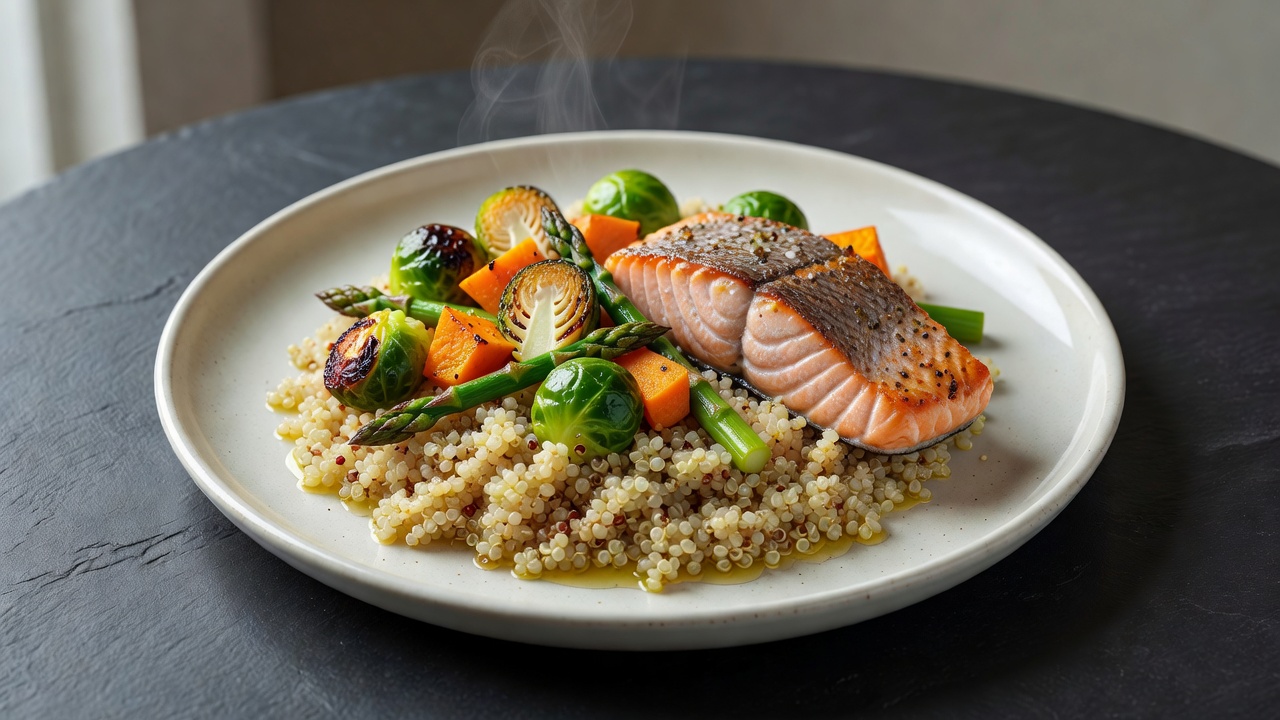
A starchy food can supply energy and structure: rice, potatoes, bread, pasta, maize or other staples. A protein source might be beans, lentils, tofu, eggs, fish, meat or dairy, depending on preferences and needs. Vegetables or fruit add different combinations of fiber, vitamins, minerals, texture and flavor. Oils, nuts, seeds and other fats help with taste and the absorption of fat-soluble vitamins.
Diagram blocks identify roles; their sizes are not serving recommendations. Add fats, sauces and seasonings as appropriate.
Foods can occupy more than one role. Beans provide carbohydrate, protein and fiber. Yogurt can contribute protein and calcium. Nuts contain fat as well as protein and fiber. A framework that forces every ingredient into one rigid box loses some of that useful complexity.
Build from what you already have
Begin with a familiar base rather than a shopping list for an imagined perfect meal. Leftover rice could become a bowl with chickpeas, frozen vegetables and a yogurt sauce. Bread could become toast with eggs and tomatoes. Lentil soup might need only bread and a piece of fruit to fit the occasion.
Frozen and canned foods are legitimate building materials. Frozen vegetables may reduce waste; canned beans can remove hours of preparation. Compare sodium when that matters to you, rinse beans if appropriate, and choose formats you will actually use. Convenience is a functional feature, not an automatic nutritional disadvantage.
Think about satisfaction too
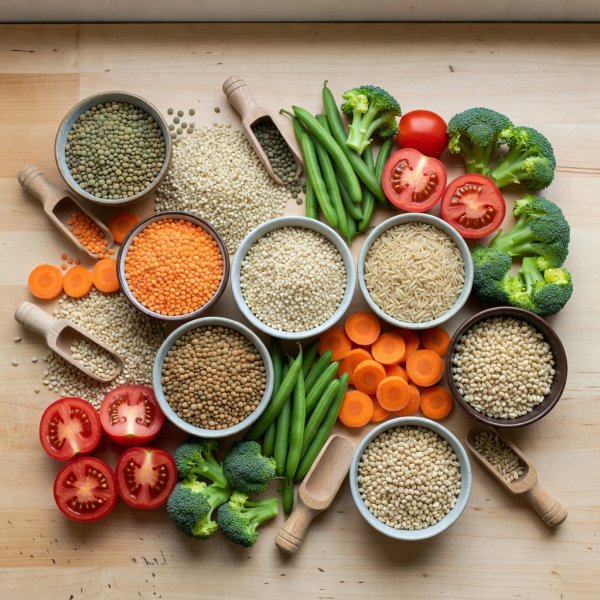
Protein, fiber, food volume and energy density can influence fullness, but individual responses and the whole meal matter. A combination that looks balanced on paper may still leave you hungry.
Flavor, adequate quantity and enjoyable texture deserve attention. Adding a sauce, a starchy side or some fat can make a meal more workable, rather than less worthy.
Make changes that survive an ordinary week
Instead of redesigning everything, identify a recurring gap. If lunch is regularly too small, add a substantial component. If vegetables are hard to prepare on busy evenings, keep an easy frozen option. If a meal is expensive, explore beans, lentils, eggs or other locally affordable ingredients rather than assuming specialty products are required.
Batch preparation can help, but only alongside safe cooling, storage and reheating. Keep sauces or crisp components separate when that improves quality. A small rotation of familiar meals often provides more practical value than an ambitious plan that demands different ingredients every day.
Know when the general model is not enough
Children, athletes, pregnant people, older adults and people with specific health conditions may have needs that a generic diagram does not capture. Food allergies, kidney disease, diabetes management and a history of eating disorders can change what appropriate guidance looks like. A registered dietitian or another qualified clinician can help adapt the general principles.
Observational nutrition studies can identify associations, but they do not establish that one lunch causes a particular outcome. Controlled studies answer narrower questions and may not reflect every setting. The practical interpretation is to build a varied, sustainable pattern—not to expect a precise benefit from adding one fashionable ingredient.